
Types of Flying
Last Updated 3/3/2026
Morning Sledders
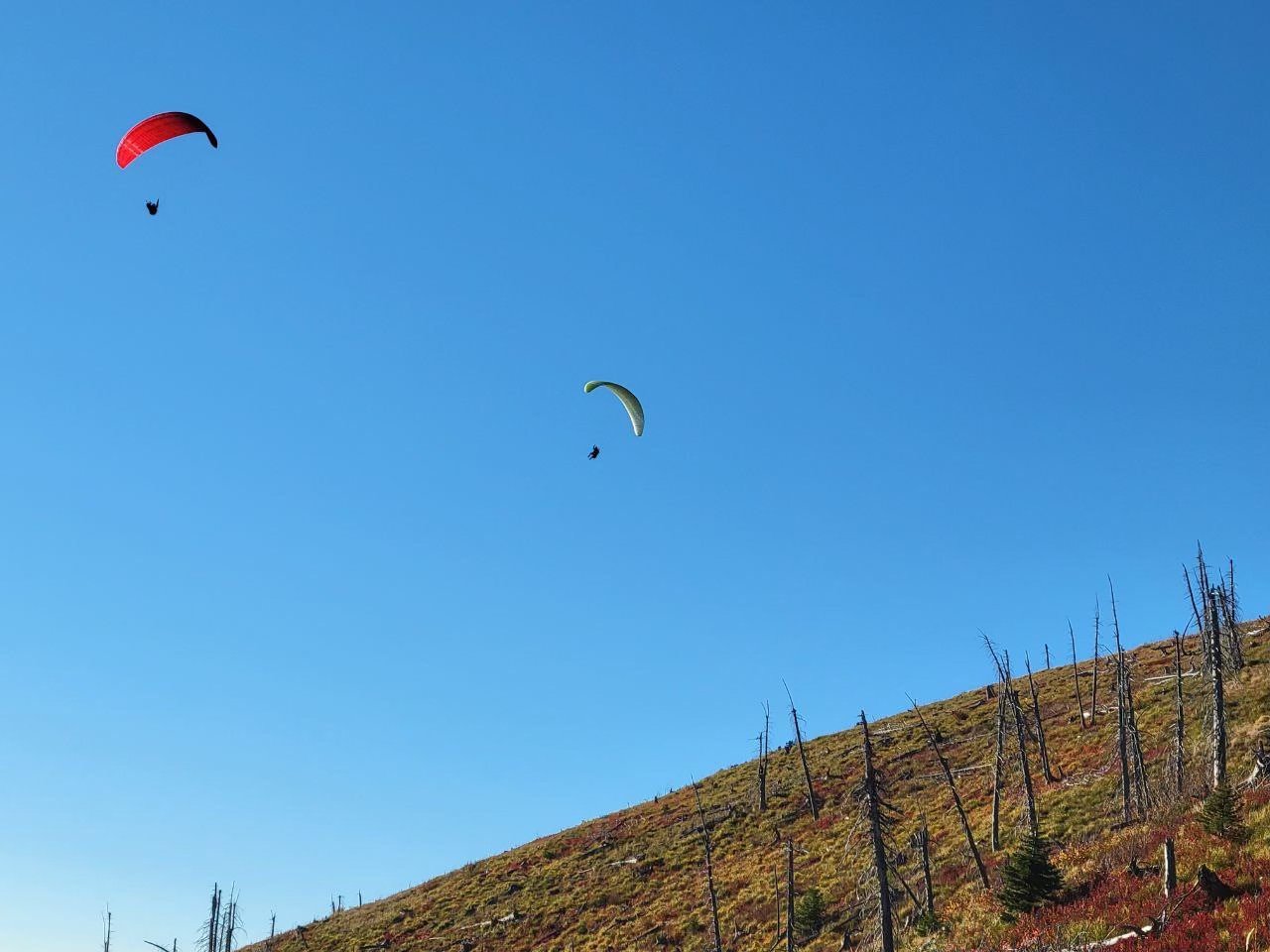
On days with an appropriate forecast, there’s a window in the morning (generally between 8 and 10am) for smooth descent flights. Many P2s experience their first mountain flights in this fashion, and many experienced pilots take advantage of low-stress conditions to maintain currency.
Morning Sledder Flying Tips:
Arrive at launch early and observe conditions as the day turns on.
While base wind is blowing up the hill and thermic cycles have not yet begun, there’s a great opportunity to practice the most important components of flying safely: Launch, Fly, Land, Repeat.
Novice pilots who launch early should immediately head for the LZ and only turn in rising air once within a 1:1 glide from the LZ.
Do not launch in a tailwind!
More experienced pilots hoping to stay aloft mid-day should wait on launch till thermal cycles become consistent which begins around 9am-10am.
Thermal Flights
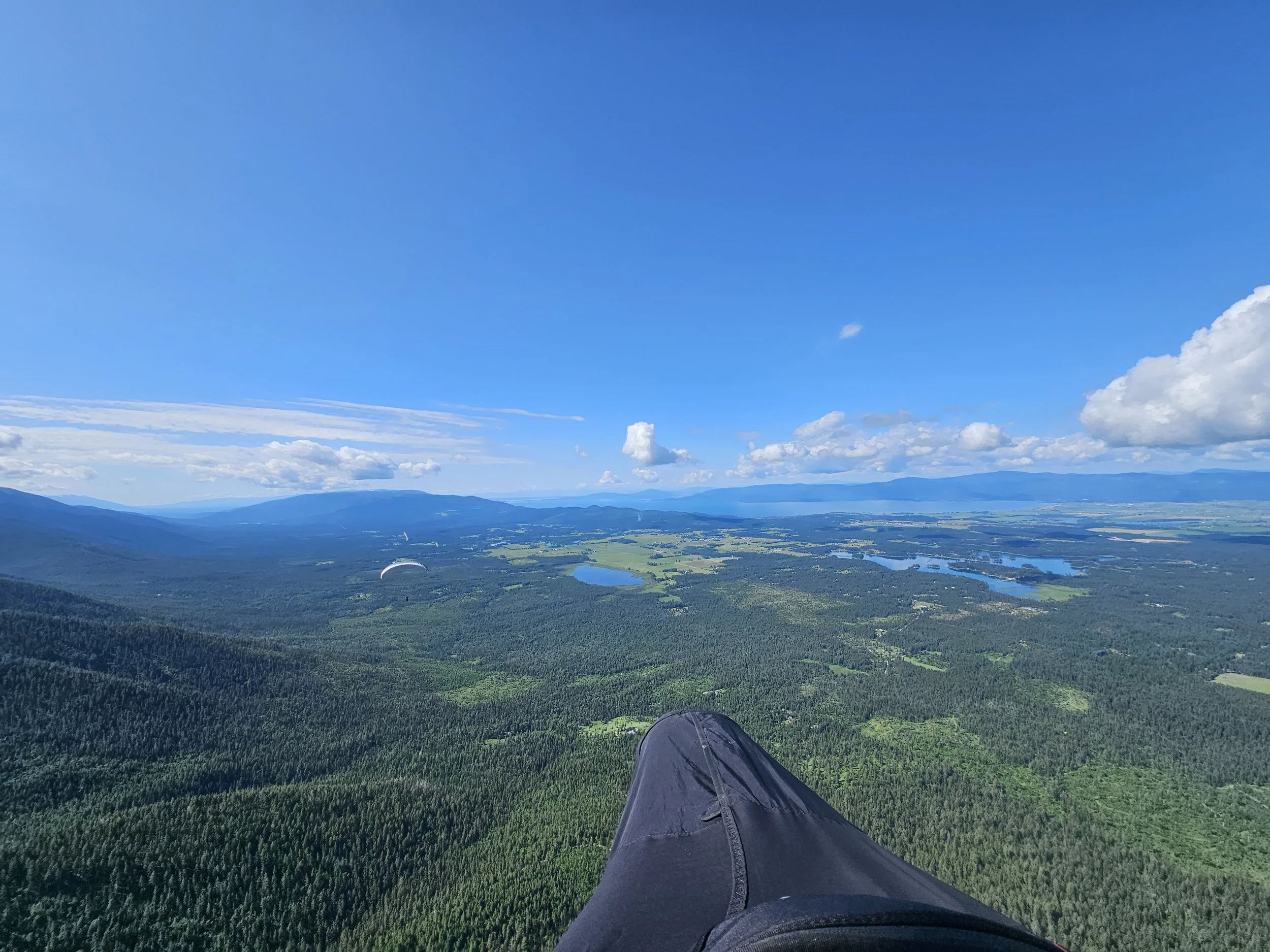
Checkerboard Launch is ideally situated for thermal flying in Southwest winds. Cross-country flights are possible downwind to the South, as well as into wind to the North.
There are limited landing fields as soon as you leave launch and head south or north..
Many pilots fly south towards Swan Lake or north towards Columbia Falls..
A short XC down South to the Swan Lake Community or North towards Columbia Falls is a rewarding achievement for newer XC pilots and an easy retrieve.
If flying North from Checkerboard Launch, be cautious of Class C airspace around Glacier International Airport.

Thermal Flying Tips:
Mid-day thermal flying is not appropriate for P2 pilots, as conditions are almost always outside of the P2 flying parameters.
On days with a good lapse rate, the thermals can be very strong. Sink will be stronger. If you are trying to catch thermals mid-mountain, it is always possible that you will get flushed in a sink cycle and will need to go to the Lunch Lady LZ. A better tactic is to catch your first climb closer to the LZ and stay with it as it drifts back toward the Swan Range.
Pilots should always be aware of thermal drift. Do not let the thermal drift you back past ridgeline unless maintaining 500 AGL
Pre-flight planning should include a careful review of the winds throughout the entire air mass. It is common for surface forecasts to show low winds, but wind at the top of lift may be much higher. If a pilot is not aware of this, they could end up getting pushed too far back as their thermal drifts with increasing wind.
Limited amount of Landing Zones- If you are getting low, make your way from the mountains to the Flathead or Swan Valley.
Glass Off Flights
Checkerboard Launch is known for epic evening soaring conditions. Glass-off conditions happen on days when there is lots of sun and a strong West/southwest wind. As the day winds down, the valley begins to release its energy, resulting in broad, smooth lift in front of the mountain.
Pilots on launch will notice increasing time between thermal cycles and a steadier base wind.
During the summer and fall, this transition happens around 5:00 pm.
In the late summer and autumn, it starts as early as 3:00 pm.
Glass-off conditions can last until sunset and pilots can reach 12000’ MSL, and are ideal for lower airtime pilots looking to gain hours, as well as for experienced pilots looking for a relaxing flight with gorgeous views.
Glass Off Flying Tips:
Land before sunset.
As the sun approaches the horizon and the atmosphere starts to cool, a strong katabatic flow begins to descend from the mountain to the LZs.
Not only can this create a shear layer anywhere between 100 and 300 feet above the ground, it also can cause switchy winds in the LZs.
At the end of the day, pilots must constantly observe LZ wind indicators, and practice active piloting all the way to the ground. If there are pilots already on the ground, it’s a good idea to radio an LZ wind update.